
Chinese Characters
Across Beijing, a cheerful anthropomorphism prevails that evokes American advertising of the post-World War II era.

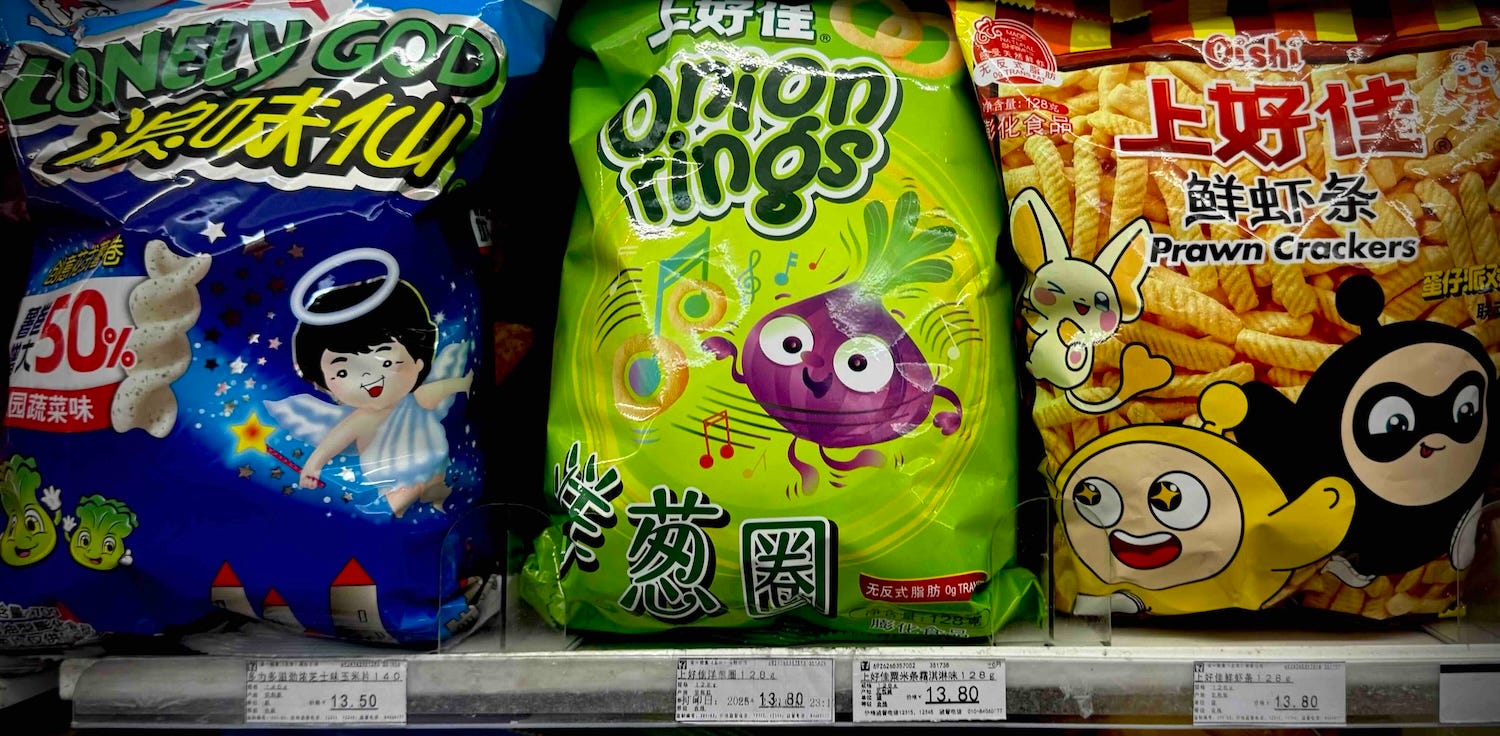
YOU LIKELY KNOW the look and feel. In midcentury American life, they were ubiquitous: exuberant characters concocted by artists and designers from animals, from household items, from foodstuffs, from anywhere. Just about any animate or inanimate object could be reborn as an anthropomorphic cartoon to sell or amplify a consumer product.
The heyday of this sensibility — which was, not coincidentally, also the golden age of kids’ cartoons in American life and the emergent era of peak Madison Avenue — produced characters that are forever woven into the emotional fabric of Gen-X kids like me.

There was Charlie the Tuna. Big Boy. Misters Peanut and Clean. Kool-Aid Man (my hyperactive younger self always wanted desperately to arrive by punching through a wall). The Pillsbury Dough Boy. The Dow Scrubbing Bubble. That excitable Hawaiian Punch guy. Tony the Tiger. Count Chocula. Frankenberry. Boo-Berry. An entire postwar suburb of happy characters selling happy things to a happy nation — or, at least, a nation desperately grasping at happiness and the pursuit of it.
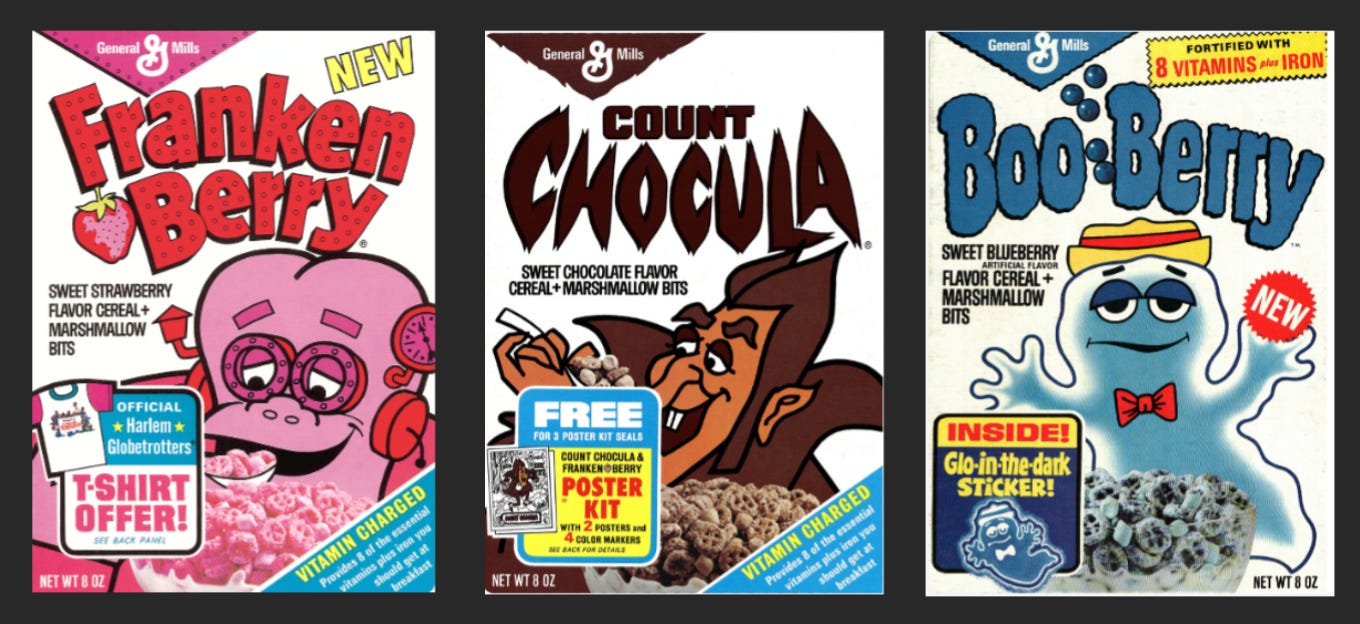
Two generations later, these types of critters have largely been relegated to the cheap seats of an American culture that sees itself as more sophisticated, though vestiges certainly remain. Star-Kist tuna still uses Charlie and refreshed him last summer, though I must admit I haven’t seen him on TV in decades and I’m no longer certain I want my tuna personified. The Dough Boy and Mister Peanut soldier on. The Hawaiian Punch guy (his name is “Punchy” — who knew?) still occupies a piece of the product’s label today, though in an age where neurospiciness is a virtue to many, his mania perhaps doesn’t land quite the same way. (The fabulous newsletter Retroist did an engaging deep dive on Hawaiian Punch last summer.)

Mine is not a scientific assessment, and such characters remain an inarguable cornerstone of American consumer culture. But they ain’t what they used to be; I can say that from lived experience.
So let’s shift the lens to a locale where they are delightfully omnipresent and multitudinous in their diversity: China.
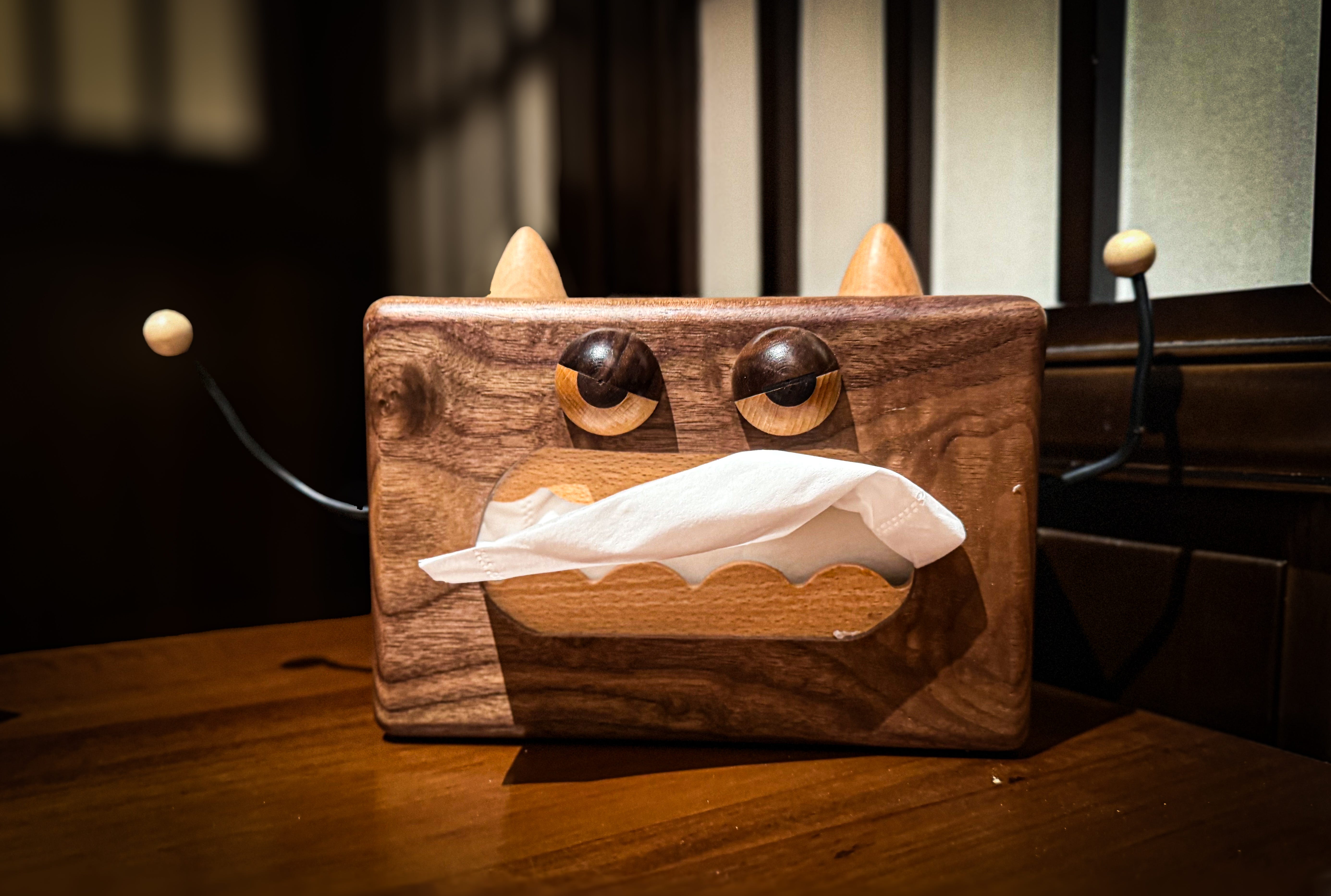
HERE IN BEIJING, the Chinese analogues to these kinds of characters are “alive” and well — and positively thriving. Everywhere you turn, another one of them beseeches you to pay attention and purchase.
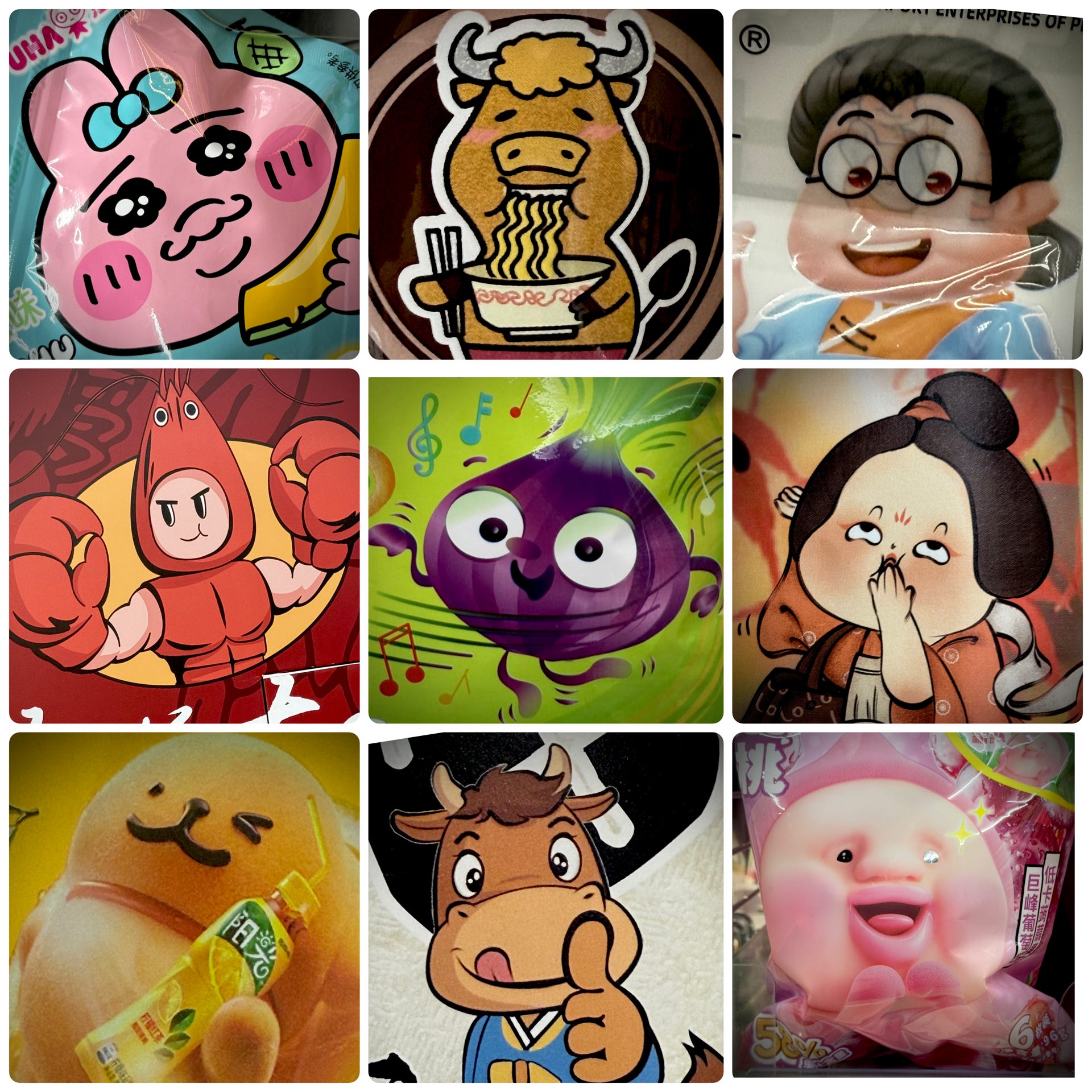
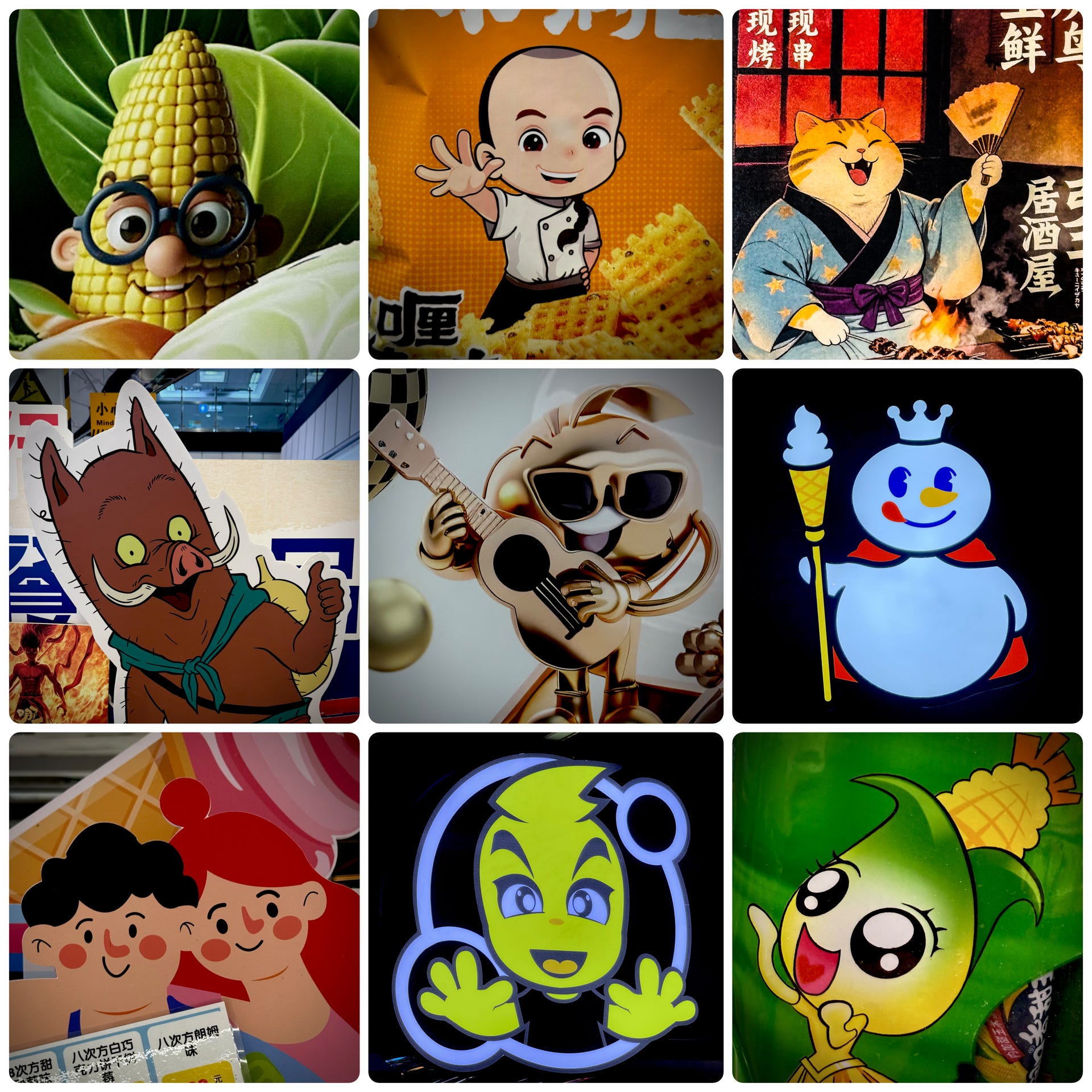
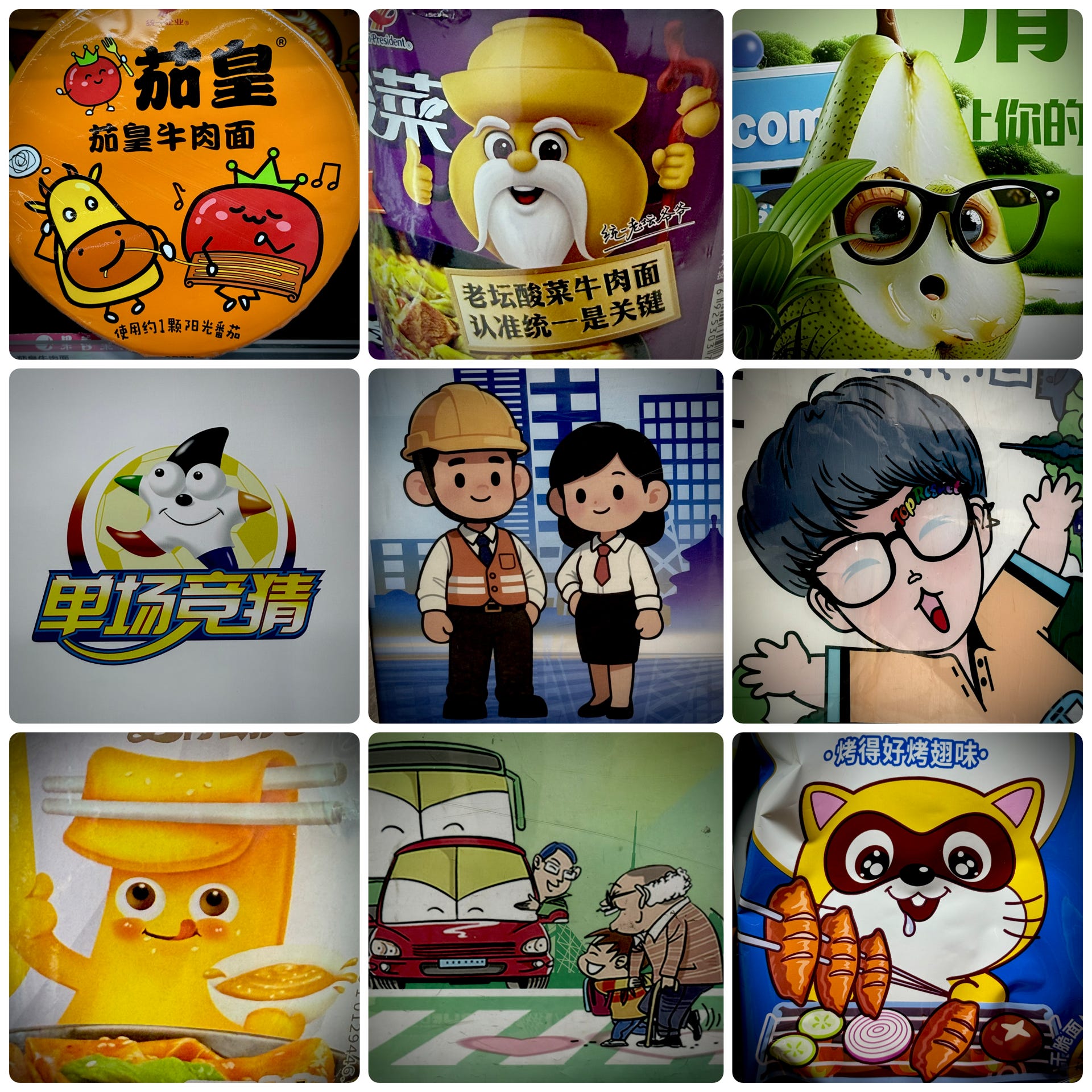
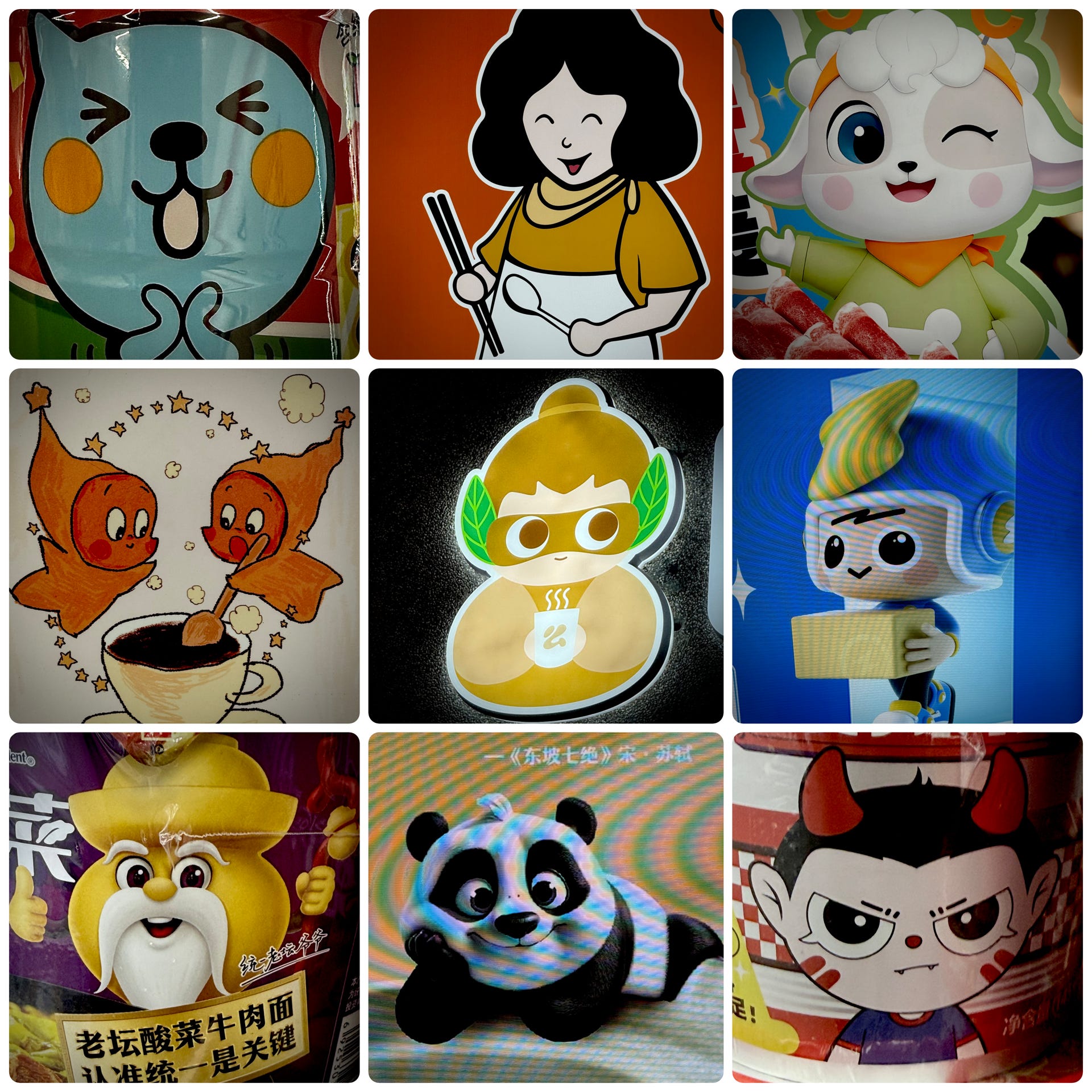
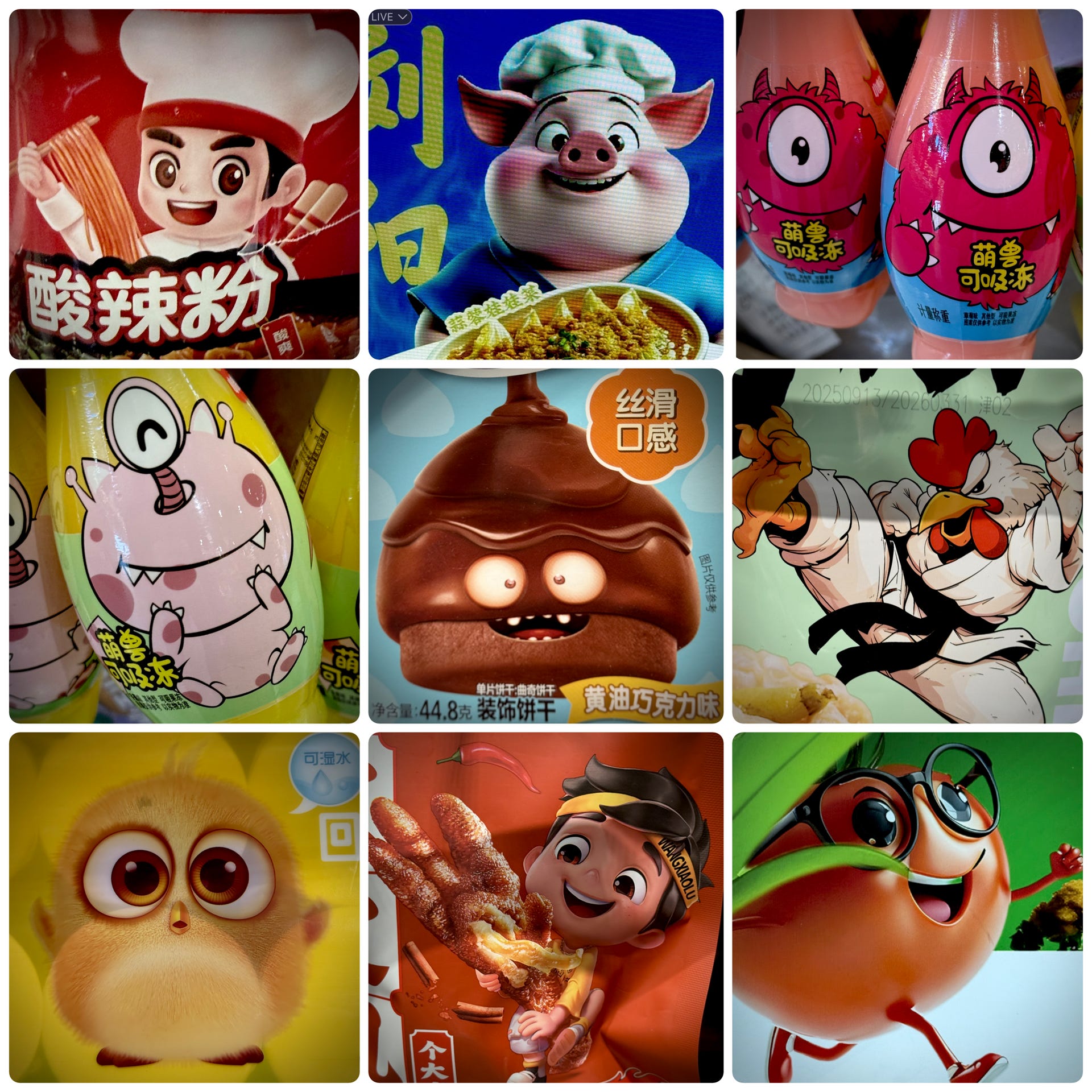
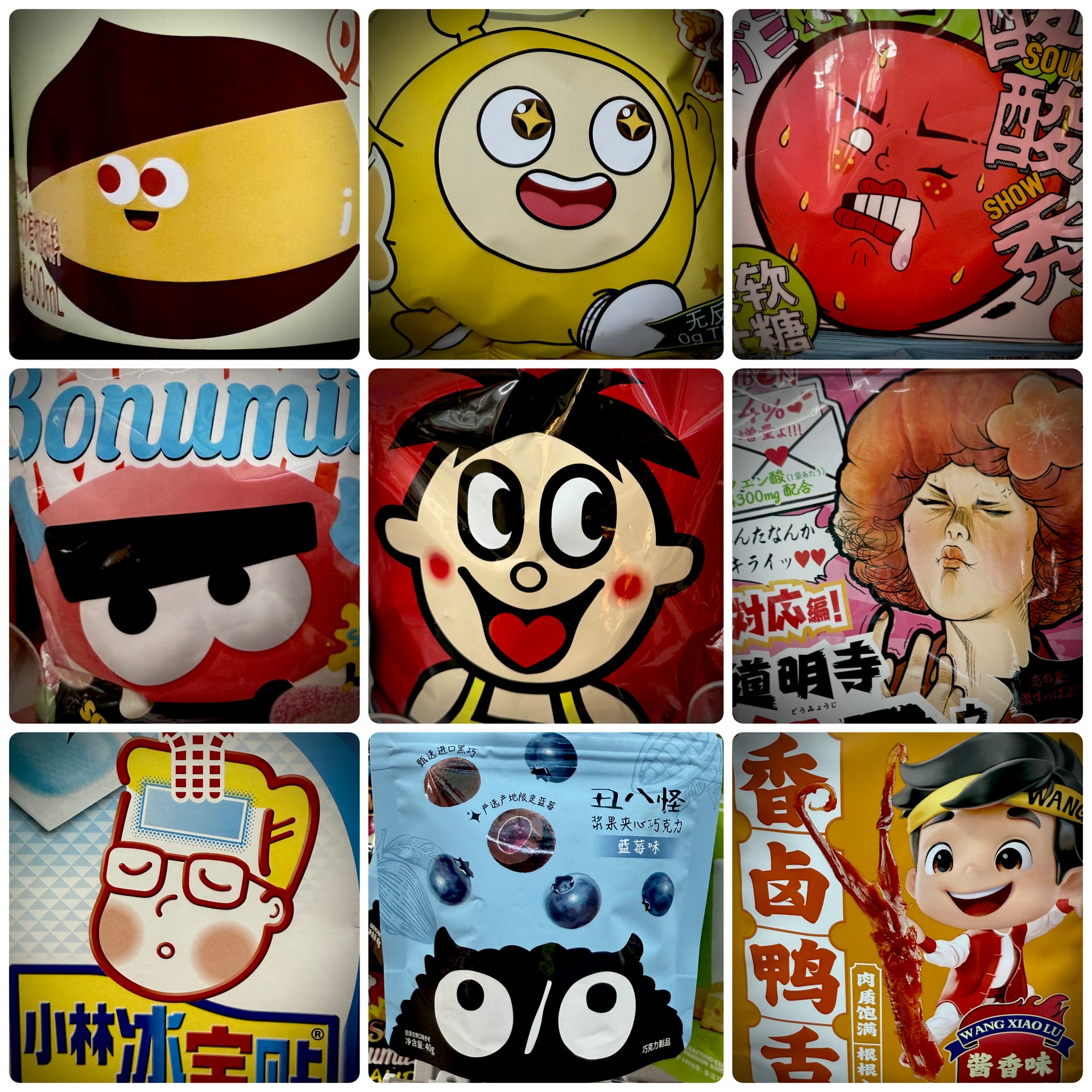
There is the exuberant raccoon playing a string instrument. The vaguely aggressive boy dressed as a scarlet crustacean. The cow cheerfully slurping beef noodles. Sundry ears of anthropomorphic corn. And then there are creatures whose phylum, genus and species are all unrecognizable — beings that nature would never consider creating, some of them unhinged in a noticeably Ren & Stimpian manner.
In an era when bright hues are retreating from many parts of American public life, this coat of many consumer colors is quite refreshing.
I’m not saying China is the only place that has these little creatures. I saw them all over the place while living in Thailand, and Japan’s long tradition of all kinds of cartoons — including cute products — gave rise to a generation obsessed with Sanrio’s “Hello Kitty” multiverse. But since I’m here in China, China is where we shall look.
You will be glad to hear that I, your representative in these parts for the moment, have spent the past several weeks noticing, appreciating and photographing these little guys as I encounter them.
So enough from me, as my father liked to say. Here’s what is truly worth sharing: the collages of characters that populate the streets, alleys, supermarkets, convenience stores and snack racks of Beijing, served up to make you think — or just to make you happy, if only for a moment or two.
What a strange cultural adaptation! Great article.
The comparison between peak Madison Avenue mascots and modern Chinese advertising is such a smart lens for looking at cultural shifts in consumerism. Its fascinating how these antropomorphic characters carry diferent weight depending on the economic moment. I spent time in Shenzhen a few years back and was struck by how joyful the packaging felt compared to the more muted minimalism taking over Western shelves.